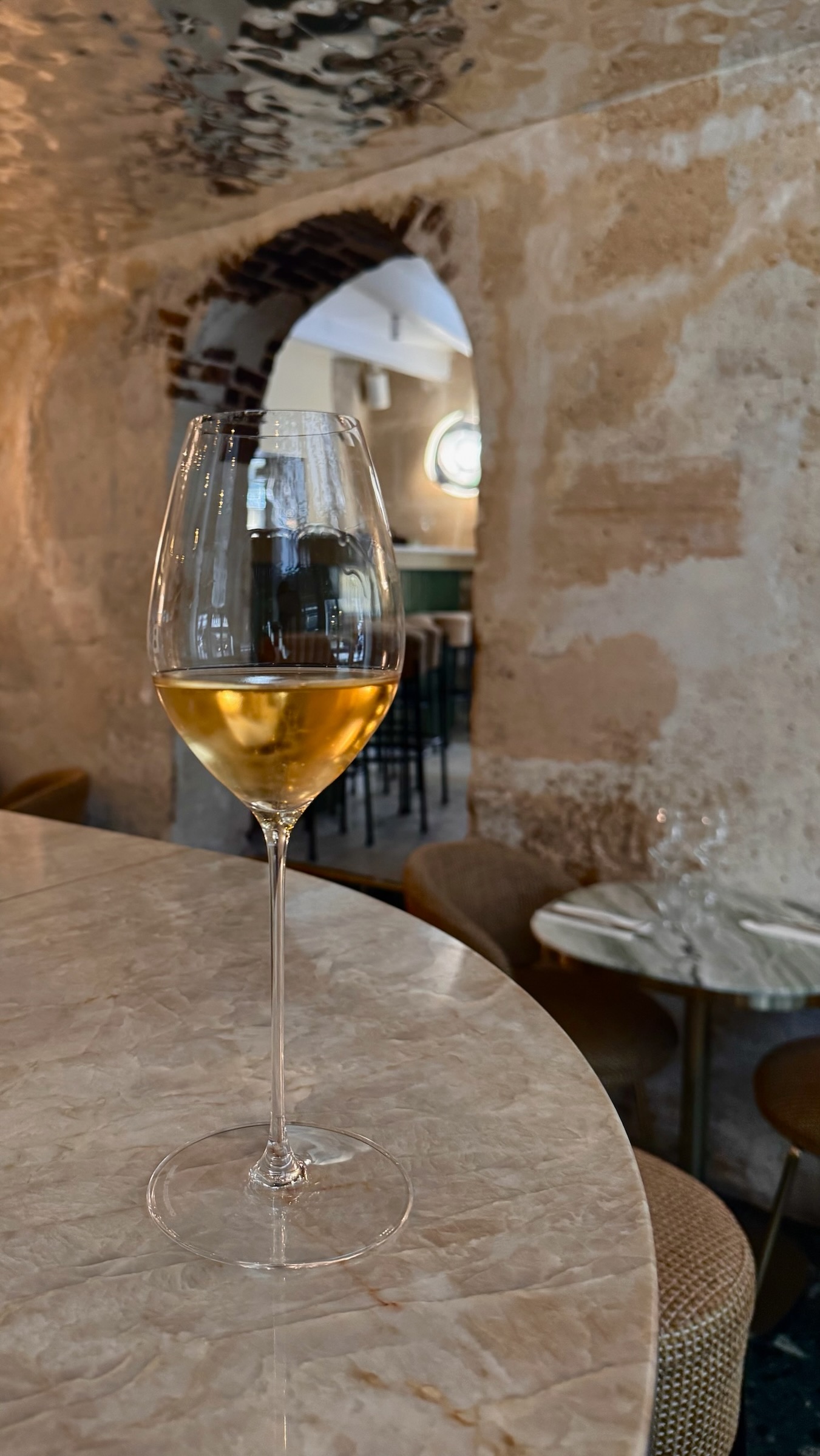
 In the Glass
A Chardonnay Worth the Argument
Burgundy made this grape. California reinvented it. Neither side has it entirely right.
There is no grape more argued over at a dinner table than Chardonnay. Half the room wants nothing to do with it. The other half orders it reflexively, without looking at the list. Both camps are wrong, and both camps have a point.
The grape itself is almost aggressively neutral. Left alone, it produces something lean and mineral and barely there. What you taste in the glass is almost entirely a conversation between the site and the winemaker — which is exactly what makes it interesting, and exactly what makes it so easy to ruin.
The Inset Layout
Use this for a single photo that sits naturally in the flow of the text. It fills the column width and reads like an editorial image — clean, considered, unhurried.
Burgundy — specifically Chablis at the cold northern end, and Meursault and Puligny-Montrachet further south — defines the grape’s ceiling. High acid, careful oak (or none at all), and a limestone-driven precision that makes the wine feel almost architectural. You can taste the place. That is the point.
The Full-Bleed Layout
Use this for a big, atmospheric image — one that deserves to breathe. It breaks past the edges of the text column and runs wide. Reserve it for hero moments within the story.
California found a different answer — riper fruit, more generous oak, a texture that borders on opulent. For a long time the default was too much of both, and the backlash was justified. But the better producers found the line. A good Santa Barbara Chardonnay from a careful hand is not trying to be Burgundy, and it shouldn’t be.
The Float Layout
Use a float when you want the image to live alongside the text, not interrupt it. The reader’s eye moves between the photo and the paragraph at the same time. Works best with a detail shot or a portrait — something that doesn’t need to be large to read well.
The question worth asking when you pick up any Chardonnay is not whether you like the grape — it’s whether you trust the person who grew it. A committed grower with a clear point of view and a site that actually suits the variety will produce something that makes the argument moot. The wine speaks clearly enough that the debate in the room goes quiet.
That’s the version you’re looking for. It exists more often than the skeptics will tell you, and less often than the devotees believe.
The Bottle Block
Use this to call out a specific bottle within the story — a raised card with the essentials and nothing you have to argue with.
The Two-Up Layout
Use this for a pair of images that belong together — two sides of the same moment, or a before-and-after. One shared caption ties them into a single thought.
Order the one that sounds too good to be true. Read the label first. If the vintage, the producer, and the site all check out, trust it. Chardonnay at its best is not a gamble — it’s a considered choice, made by someone who knew what they were doing. You just have to find them.